Drainage in Woodberry
Hydro Jetting Woodberry
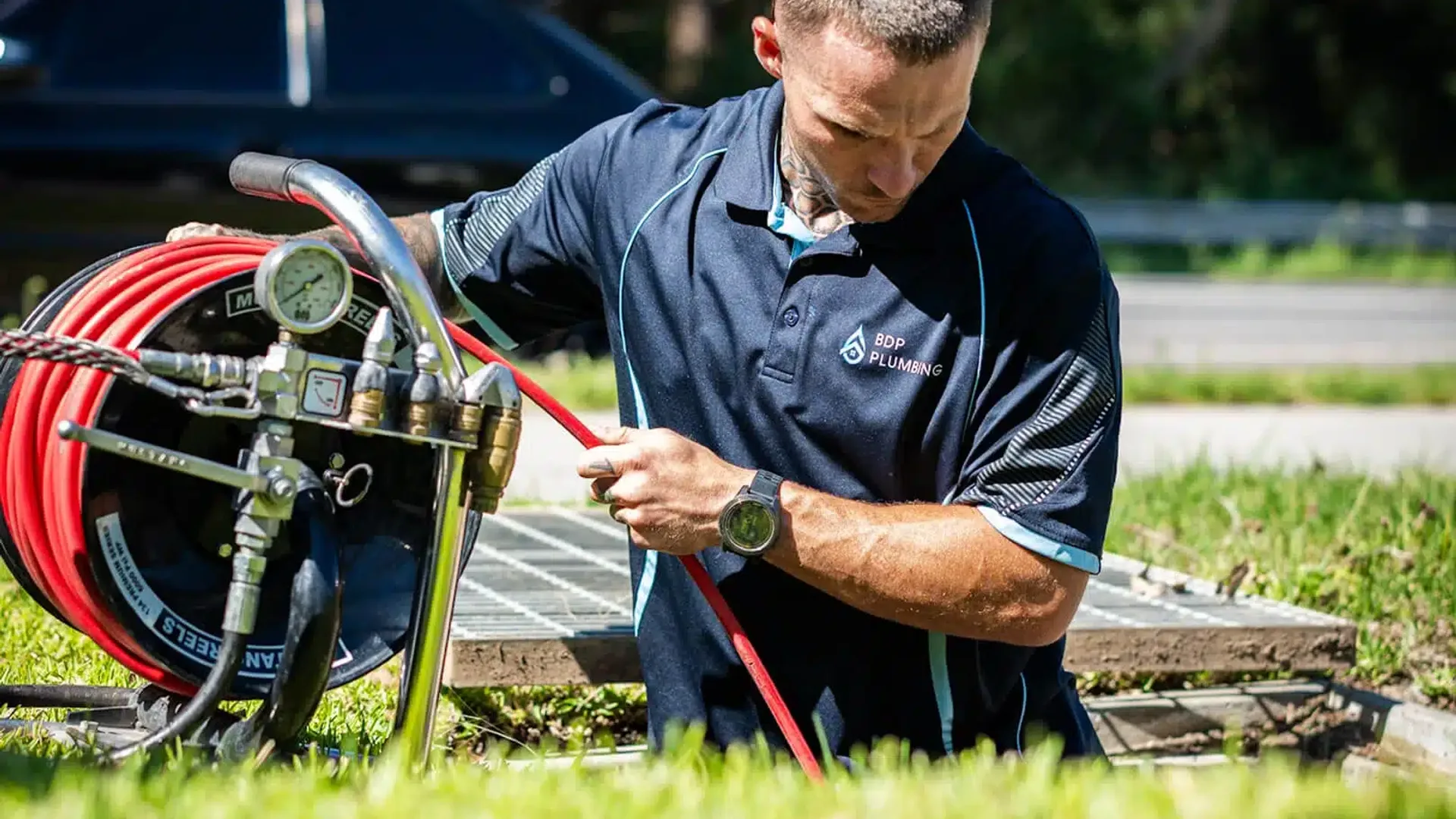
Hydro jetting Woodberry is the high-pressure way to clean a drain properly instead of just punching through the clog. Plumbers Woodberry runs jetting gear on the truck for root masses, grease buildup and silted stormwater lines across Woodberry.
Still working out what's wrong? The drainage hub covers the full blocked-drain stream, from first clearing to camera work.
The short version: a jetting nozzle fires water at pressures no household hose gets near, and it scrubs the inside of the pipe back to the wall. That matters here, because plenty of the drains we clean are old, brittle and coated in stuff a cable machine would leave behind.
What Hydro Jetting Actually Does
A drain machine cuts a blockage so water flows again. Jetting goes further. The nozzle drags high-pressure jets backwards down the pipe, stripping grease, scale, silt and root growth off the walls as it travels.
That difference shows up months later.
A cut line blocks again fast
A jetted line starts clean
Jets reach the whole run
Why Woodberry Drains Need It
This suburb gives jetting more work than most. The original 1970s-80s subdivision was built with earthenware sewer and stormwater pipes, and earthenware joints open up as the ground moves. Established gums through the older streets find those joints and push roots straight in.
The ground does the rest.
Low floodplain setting
Heavy rain
Half measures fail
That last point is exactly why these lines keep coming back on the call-out list.
Where High-Pressure Water Earns Its Keep
Jetting isn't the answer to every blockage, but it's the right tool for four situations we see around here constantly.
Old earthenware lines
Root intrusion
Grease-heavy waste lines
Silted stormwater
If the blockage is a single foreign object, like a toy or a collapsed section, jetting won't fix it on its own. That's what the camera is for, and CCTV drain inspections pair with jetting on every stubborn line.
How a Jetting Job Runs
The sequence is simple, and you know the price before any of it starts.
- 1
Find the cause first
For a repeat or unclear blockage, the camera goes down and locates the problem, so we're jetting the right line for the right reason.
- 2
Set up and protect
The line is isolated where needed and the jetting head is fed in from the access point, with the water pressure matched to the pipe material.
- 3
Jet and flush
The nozzle works back through the run, stripping walls and washing debris toward the boundary trap until the water runs clear.
- 4
Verify and report
A second camera pass confirms the line is clean, and you see the result rather than taking it on faith.
Step 3 is where the work happens on a root-heavy line. The nozzle passes the joint several times, trimming the mat level with the pipe wall instead of leaving a stub for regrowth.
What Shapes the Cost
You get a firm quote before work begins, and the $0 call out means getting us to the door costs nothing. What moves the number on a jetting job:
Length of the run
What's in the pipe
Access
Whether a camera is needed
If the camera shows a cracked or collapsed section, jetting cleans what it can and the repair conversation happens with you looking at the footage. No surprises after the fact.
Related Drainage Work
Jetting sits inside a bigger toolkit, and the right page depends on what your line is doing.
For urgent overflows that can't wait, the emergency plumbing team handles the after-hours stream.
Hydro Jetting Questions, Answered
What does hydro jetting do that a drain machine cannot?
A cable machine cuts through the clog so water moves again. Jetting scours the full pipe wall, so grease, scale and root mats are stripped off rather than left behind.
Is jetting safe for old earthenware pipes?
Yes, once the pressure is matched to the pipe. We check the line's condition first, then jet at a setting that cleans the walls without cracking brittle earthenware joints.
How long does a jetting job take?
Most household jobs run one to three hours. Long runs on rural-residential blocks or thick root mats take longer, and the time estimate sits in your quote before anything starts.
Do you jet stormwater lines as well as sewer lines?
Both. Stormwater lines here gather silt and leaf litter between downpours, and jetting flushes that settled sediment out of the line before the next heavy rain loads the system up again.
How often should a problem drain be jetted?
A line that blocks every year or two is worth jetting once the cause is confirmed. Roots regrow from hairline cracks, so the right interval depends on what the camera shows.
Do you check the line after jetting?
Yes. A second camera pass runs once the water runs clear, so you can see the walls are clean and nothing has been missed before we pack up the gear.
Plumbers in Woodberry and the suburbs around it
Book a Jetting Clean
If a drain keeps blocking or a line has never had a proper clean, jetting is the fix that lasts. Call (02) 4063 3455 and tell us what's happening. $0 call out across Woodberry, a clear quote before any work starts, and a job that gets made right if it isn't right the first time.